The Complete Guide to Sewer Line Installation for Homeowners
Is your yard starting to smell like a bog? Are drains gurgling and backing up at the worst times? Sewer line trouble is something no homeowner wants to face. But when it happens, you need facts and a clear plan—not panic.
At Splash Plumbing, we know every buried pipe has a story. Some are decades old, others have seen one too many tree roots. Whether you’re planning a remodel or tackling an emergency, understanding sewer line installation helps you make smarter, safer choices.
When Is a New Sewer Line Needed? 🚩
Let’s clear the fog. Not every clog means you need a new pipe. But certain signs spell trouble:
- Soggy patches or lush green strips in your yard
- Persistent sewage smells indoors or out
- Multiple drains backing up at once
- Unexplained foundation cracks or sinkholes
Aging pipes, shifting soil, and root invasions are notorious culprits. Even new homes aren’t immune if installation was rushed or pipes were low quality. Sometimes, local regulations require upgrades after home additions. According to the International Plumbing Code (IPC), sewer lines must meet current standards for material and slope—so an old setup won’t always cut it.
If you’re unsure, a professional sewer line inspection can reveal the real story underground.
Types of Sewer Pipes
Think of sewer pipes like runners in a relay—they need to be tough, reliable, and right for the terrain.
- PVC (Polyvinyl Chloride): Lightweight, rustproof, easy to install. Modern standard for most residential jobs.
- ABS (Acrylonitrile Butadiene Styrene): Similar to PVC but black and slightly more rigid.
- Cast Iron: Found in older homes. Quiet, durable, but prone to corrosion.
- Clay: Historic choice—very resistant to chemical degradation but cracks under pressure.
- HDPE (High-Density Polyethylene): Flexible and great for trenchless installs.
- Orangeburg: A fiber pipe found in mid-century homes. If you have it, replacement is overdue.
Choosing the right type matters for durability and code compliance. Some municipalities restrict certain materials; always check local guidelines or ask your installer.
Planning: The Foundation of a Smooth Project
Every sewer line project starts with a map—literally. Your installer will:
- Locate existing lines, utilities, and property boundaries
- Measure the slope (a sewer line must drop at least 1/4 inch per foot, per IPC)
- Evaluate soil type and groundwater
- Confirm pipe size for household or business needs
Skip this, and you risk hitting a gas line or installing a pipe that can’t handle your household’s flow. If you’re planning a remodel, coordinate with your contractor early.
Permitting and Code Compliance
No one enjoys paperwork, but permits protect you from headaches later. Most cities require:
- Permit applications before breaking ground
- Inspections at key stages (rough-in, final)
- Proof that materials and installation meet code
Cut corners here and you could face fines, delays, or forced re-dos. Always check with your local building department or ask your plumber to handle the process. The Uniform Plumbing Code (UPC) and local amendments set the bar for safety and quality.
Material Selection: What’s Under Your Yard Matters
Choosing pipe material is like picking shoes for a marathon: durability, fit, and environment matter.
- PVC is king for most installs—affordable, long-lasting, and smooth inside (less likely to clog).
- Cast iron may be best near foundations where strength counts.
- HDPE shines in areas needing flexibility, like shifting soils.
Trench depth, surrounding soil, and even local wildlife can influence your choice. Don’t go it alone—get advice specific to your property.
Trenching and Excavation: Digging In
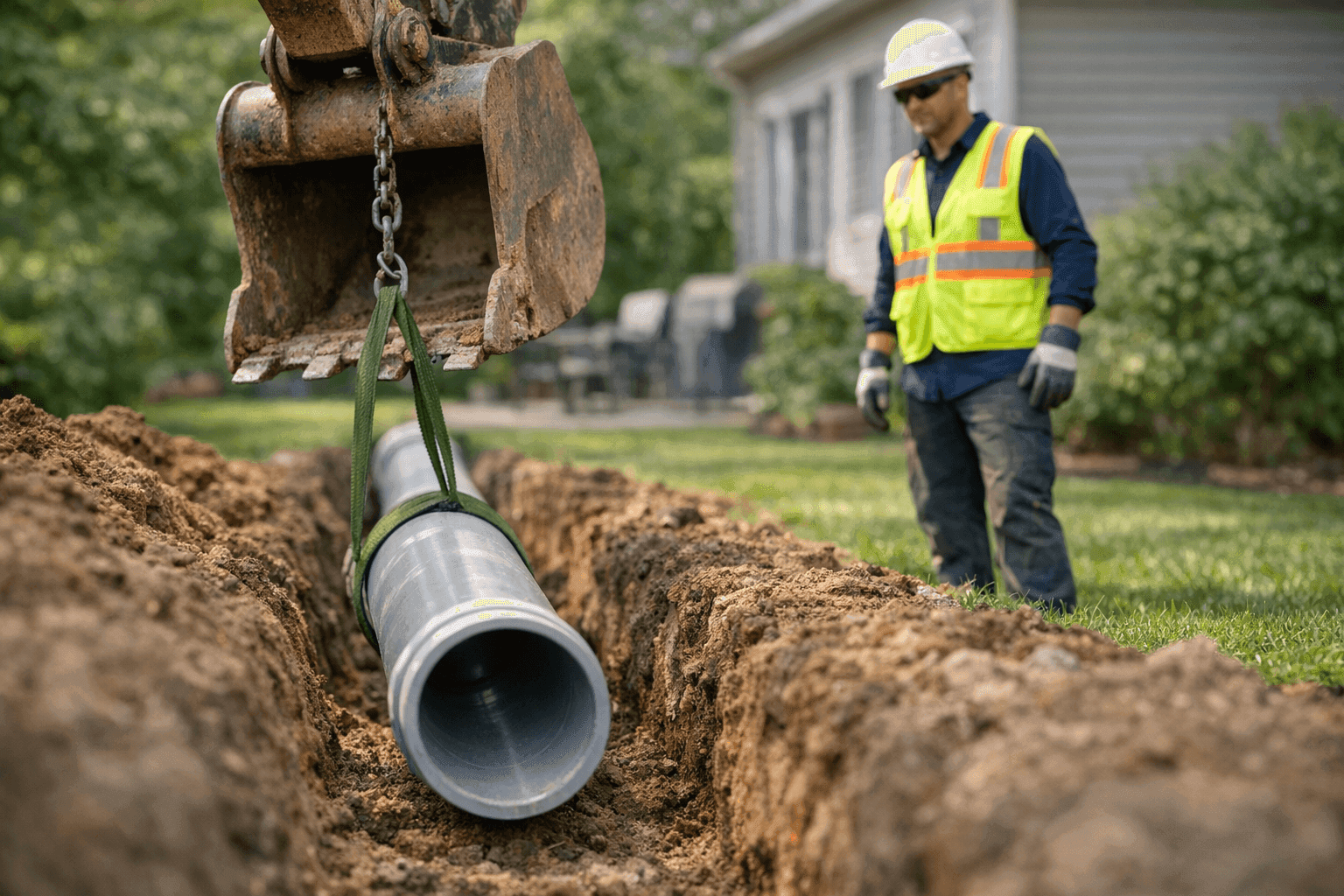
This is where the heavy lifting starts. Your plumber will:
- Mark out the trench path, avoiding gas, water, and power lines
- Excavate to appropriate depth and slope
- Remove old, damaged pipe if replacing
Expect disruption—lawns get torn up, driveways may need cuts, and equipment can be noisy. Good pros keep the work zone safe and tidy, and restore your yard as much as possible.
Remember: DIY digging can be dangerous and may violate “call before you dig” laws. Professionals use ground-penetrating radar or locate services to prevent disaster.
Installation Steps: From Ground to Flow
Installing a new sewer line involves a careful dance:
- Bedding the trench: A layer of sand or gravel cushions the pipe.
- Laying pipe sections: Each must fit tightly and slope gently toward the main.
- Securing joints: Glued, clamped, or gasketed for leak-proof performance.
- Connecting to the main: Final tie-in to the city or septic system.
- Initial testing: Water or air pressure checks expose leaks before backfilling.
If you’re curious about the full process or want to see what’s involved, check our sewer line installation service for more on the steps and standards we follow.
Common Pitfalls and How to Avoid Them
Even small mistakes can lead to big headaches down the line:
- Insufficient slope: Leads to slow drains and frequent clogs.
- Improper joint sealing: Allows tree roots to sneak in.
- Ignoring permits: Can stall your remodel and result in fines.
- Skipping inspections: Hidden leaks cause damage before you know it.
A reputable installer double-checks each step, photographs the job for records, and welcomes city inspectors for sign-off.
Safety Checklist: Protecting Your Property and Family
Before the first shovel hits dirt, double-check:
- All underground utilities are marked
- Permits are in place
- Safety barriers or cones are set up
- Children and pets are kept away from the site
During installation, workers wear protective gear and follow OSHA standards for trench safety. Afterward, all debris should be cleared and the site secured.
Costs and Time Factors
Sewer line installation isn’t pocket change—but it’s an investment in your home’s health. Costs depend on:
- Length and depth of the line
- Material chosen
- Obstacles (driveways, trees, landscaping)
- Local permit fees
On average, installation may take 1–3 days for straightforward jobs, longer for complex digs or repairs. Always ask for a clear, itemized estimate upfront.
When It’s an Emergency
Some problems can’t wait. Sudden gushers, raw sewage in the basement, or a total loss of plumbing function demand immediate action.
If you’re in a bind and need help fast, our team can respond to urgent calls. For those in our service area, including Goodyear, AZ, local pros are ready to assist day or night.
Timeline & Disruption: What to Expect
Rewiring your yard’s arteries isn’t a quiet affair. Expect:
- Machinery noise and possible traffic rerouting
- Access restrictions to some home areas
- Water shutoff for short periods
Most reputable plumbers communicate clearly, stick to the timeline, and restore your property as much as possible.
DIY vs. Professional Installation
Tempted to rent a trencher and go it alone? For minor drain snaking, DIY can be safe. But a full sewer line replacement is like open-heart surgery for your home—one wrong move and the consequences are messy, expensive, and sometimes even illegal.
Licensed plumbers handle the permits, guarantee code compliance, and carry insurance. They own specialized equipment, know local codes, and can spot problems you might miss.
Post-Installation Care 🛠️
A new sewer line should last for decades—but a little TLC helps:
- Don’t flush wipes, grease, or non-biodegradable debris
- Schedule regular inspections, especially if you have mature trees nearby
- Watch for slow drains, new odors, or wet spots in your yard
Periodic sewer line inspection can catch issues before they become emergencies. Preventative care saves money and stress down the line.
Preventative Maintenance Tips
- Install root barriers if large trees are present
- Avoid planting deep-rooted shrubs near the line
- Consider water filtration to reduce pipe corrosion
- Keep heavy vehicles off areas above buried pipes
Ask your installer for a maintenance schedule that fits your home or business.
Seasonal Considerations
Freeze-thaw cycles can crack pipes, while summer rains may stress already fragile lines. If you live in an area with harsh winters or heavy rain, ask about insulation and backflow prevention during installation.
Code Compliance: Why It Matters
Building codes exist for a reason. They protect your health, your neighbors, and your investment. Inspections at rough-in and final stages—required by most city or county authorities—ensure everything meets modern standards.
A code-compliant sewer line isn’t just a legal requirement—it’s peace of mind.
Frequently Asked Questions
Q: How long does a sewer line last?
Most modern lines last 50+ years with proper care.
Q: Can I reuse old pipes?
Rarely. Old pipes may be brittle, corroded, or undersized for today’s needs.
Q: Will my yard be ruined?
Some disruption is unavoidable, but careful pros minimize damage and restore landscaping.
Q: Are tree roots always a problem?
Roots seek water; if pipes are sealed and modern, the risk drops dramatically.
Taking the mystery out of sewer work helps you make the right decisions for your property. For Water Heater Installation near you, or any plumbing project big or small, Splash Plumbing is here to help.
Call Splash Plumbing now — or reach us anytime at 877-879-0650 .